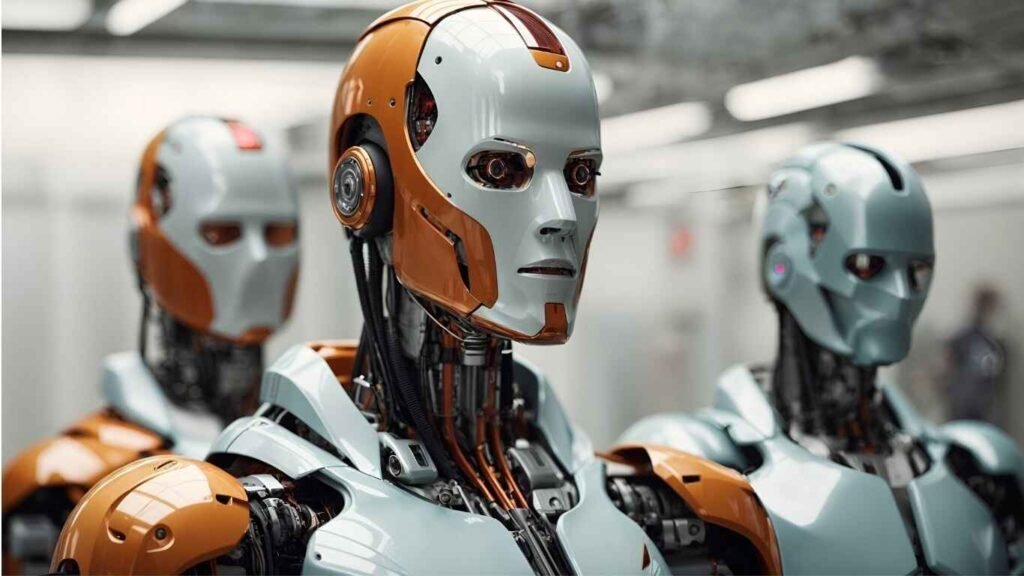
The United States set strict limits on the import of foreign-made advanced Chinese humanoid robots and critical power infrastructure components. Another big escalation of the technological rivalry between Washington and Beijing. The policy comes as concerns grow about cybersecurity, supply chain resilience, artificial intelligence and national defence.
This article provides an in-depth analysis of the ban. Its strategic objectives, impact on industries, and implications for robotics manufacturers. Also what companies should prepare for going forward.
Overview of the US Ban on Chinese Humanoid Robots
The Trump administration banned the import of new foreign-made advanced humanoid robots and other intelligent robotic systems. These have been approved for use in the United States. Because they pose unacceptable national security risks.
The restrictions specifically target:
- Advanced humanoid robots
- Quadruped robotic systems
- AI-enabled autonomous robots
- Certain foreign-produced power inverters
- Future imported products requiring FCC authorization
Existing approvals for previously approved products are not affected and products may continue to be sold under existing approvals. The move is one of the most aggressive efforts of technology security to restrict foreign influence in critical American infrastructure.
Why the United States Banned Chinese Humanoid Robots
Several interconnected concerns motivated the ban.
1: Cybersecurity Risks
Modern humanoid robots are essentially mobile computers equipped with:
- Cameras
- Microphones
- GPS modules
- Lidar sensors
- AI processors
- Wireless networking
- Cloud connectivity
Government agencies fear these capabilities could potentially allow malicious actors to:
- Gather sensitive visual intelligence
- Monitor secure facilities
- Collect biometric information
- Access private communications
- Map restricted environments
- Transmit confidential operational data overseas
Because these machines continuously collect environmental information, they represent a unique cybersecurity challenge compared to traditional electronic devices.
2. Remote Access Concerns
Connected robots receive:
- Software updates
- Firmware patches
- AI model improvements
- Cloud synchronization
Security experts argue that remote software control could theoretically allow unauthorized parties to:
- Disable robots
- Change operating behavior
- Collect stored information
- Manipulate autonomous functions
For critical infrastructure operators, such vulnerabilities represent unacceptable operational risks.
3. Supply Chain Security
The United States has increasingly prioritized domestic control over strategic technologies.
Key objectives include:
- Reducing dependence on foreign manufacturing
- Strengthening domestic robotics production
- Protecting critical infrastructure
- Improving defense readiness
- Limiting geopolitical vulnerabilities
This approach mirrors previous actions involving:
- Telecommunications equipment
- Semiconductor exports
- Advanced AI chips
- Electric vehicle technologies
Why Power Inverters Were Included
Power inverters might seem like a far cry from robotics, but they’re a key part of modern infrastructure. They convert electricity between different current types and are widely used.
- Solar energy systems
- Battery storage
- Industrial facilities
- Utility-scale energy projects
- Data centers
Officials argue that compromised inverters could potentially:
- Interrupt electrical operations
- Provide unauthorized network access
- Leak operational data
- Disrupt energy distribution
Given their widespread deployment across critical infrastructure, they have become a growing cybersecurity concern.
How the FCC Implements the Restrictions
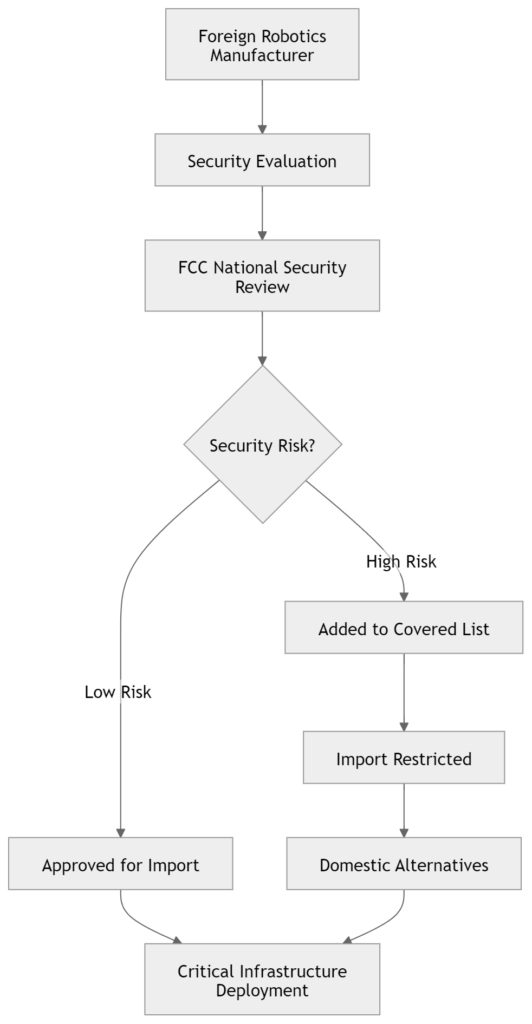
The policy is implemented by the Federal Communications Commission (FCC) to its national security list including covered products. Once a product is put on this list, it can no longer be authorised by the FCC. Meaning it can no longer be legally imported and used in the U.S.
The measure is significant:
- Shall not prohibit previously approved equipment
- Existing systems do not have to be ripped out right away
- It is concerned mainly with future imports
This phased implementation minimizes disruption while tightening long-term security controls.
Chinese Robotics Companies Most Affected
Several leading Chinese robotics manufacturers could face significant commercial challenges if future imports remain restricted.
These include companies producing:
- General-purpose humanoid robots
- Industrial robotics
- Educational robotics
- Research platforms
- Quadruped robotic systems
Many of these firms have rapidly advanced their AI capabilities, making China one of the world’s fastest-growing robotics innovators.
China’s Response
Chinese officials strongly criticized the restrictions, arguing they represent the politicization of international trade.
Beijing maintains that:
- Technology cooperation benefits global innovation.
- Trade barriers disrupt healthy competition.
- Sanctions lack sufficient technical justification.
- Artificial intelligence should remain an area of international collaboration.
Chinese authorities have also indicated they may introduce responsive measures if national commercial interests are harmed.
The Global AI and Robotics Race
Humanoid robotics has become one of the most competitive sectors in modern technology.
Major investments are occurring across:
| Region | Strategic Focus |
|---|---|
| United States | AI software, robotics startups, defense automation |
| China | Large-scale manufacturing, humanoid robotics, AI deployment |
| Europe | Industrial automation, collaborative robots |
| Japan | Precision robotics, healthcare automation |
| South Korea | Advanced manufacturing robots |
Competition extends well beyond commercial markets and increasingly intersects with national security priorities.
Economic Impact on the Robotics Industry
The restrictions may reshape global supply chains in several ways.
Increased Domestic Investment
American robotics companies may benefit from:
- Expanded government contracts
- Increased private investment
- Manufacturing incentives
- Research funding
Domestic production could accelerate as organizations seek secure alternatives.
Higher Costs
Replacing established foreign suppliers often results in:
- Increased manufacturing expenses
- Longer production timelines
- Supply shortages
- Reduced vendor competition
Businesses may face higher procurement costs during the transition.
Diversified Supply Chains
Manufacturers are likely to spread out their places of manufacturing, and not overly rely on one country. This diversification increases the operational complexity, but also the robustness.
National Security Implications
Robots are becoming more intelligent, which distinguishes them from conventional machines.
Modern humanoid robots can do:
- Comprehend spoken language
- Facial Recognition
- SOLO TRAVELLING
- Learn through doing
- Access to cloud services
- Process enormous volumes of sensory data
As AI systems become more autonomous, governments increasingly classify advanced robotics as strategic technologies requiring heightened oversight.
Impact on Artificial Intelligence Development
Robotics and AI development are closely connected.
Humanoid robots generate valuable datasets used to improve:
- Computer vision
- Object recognition
- Human interaction
- Motion planning
- Reinforcement learning
- Autonomous decision-making
Restrictions on robotics hardware may therefore influence broader AI research and commercialization strategies.
Businesses Most Affected
Industries expected to experience the greatest impact include:
- Manufacturing
- Warehousing
- Logistics
- Healthcare
- Security services
- Research laboratories
- Universities
- Renewable energy providers
- Data center operators
Organizations planning long-term automation projects may need to reevaluate procurement strategies and supplier relationships.
Process Flow of the US Technology Security Framework
Conclusion
The U.S. restrictions on Chinese humanoid robots and power inverters represent a major shift in technology policy. Towards an emphasis on cybersecurity, supply chain resilience, and strategic competition.
As artificial intelligence and robotics are becoming increasingly integrated into critical infrastructure and everyday operations. Governments are treating connected autonomous systems as essential national assets.
In such a swiftly changing regulatory environment, businesses, manufacturers and technology developers need to adjust to the new reality where innovation, security and geopolitical strategy are intertwined. Stay tuned for more AI and tech news updates.